

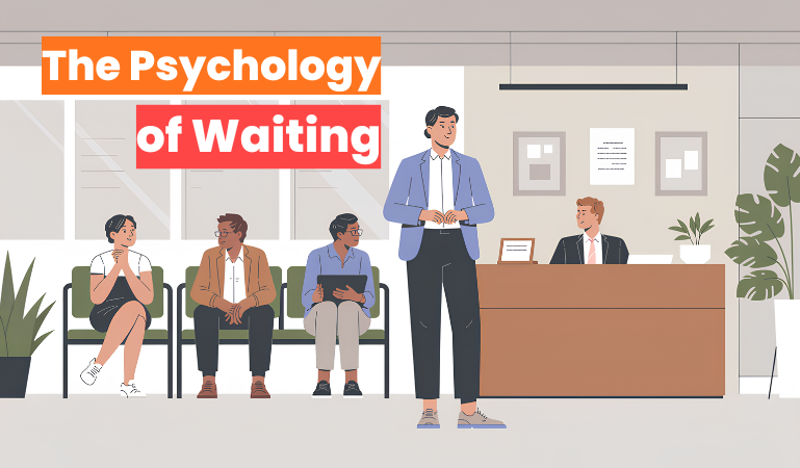
Your client walks through your office door. Within seconds, they're forming judgments about your professionalism, credibility, and whether they made the right choice. That waiting psychology is more powerful than most businesses realize.
The moment someone enters your space, their brain starts evaluating. Is this company organized? Do they value my time? Can I trust them? These business first impressions happen fast, and the waiting experience at your entrance directly shapes customer perception of everything that follows.
Why Every Second Counts?
Here's something fascinating about the psychology of waiting: time is relative. Five minutes can feel like two or twenty, depending on the circumstances.
Research shows that perceived wait time differs dramatically from actual wait time. This happens because of cognitive bias. When people wait without information about how long they'll be there, their minds magnify the duration. Uncertainty makes waiting painful.
Queuing theory in business reveals several truths:
- Occupied time feels shorter than unoccupied time.
- Uncertain waits feel longer than known, finite waits.
- Unexplained waits feel longer than explained waits.
- Unfair waits feel longer than equitable waits.
David Maister's waiting principles have shown that time perception psychology can make or break the visitor experience before any actual service happens.
What Waiting Anxiety Does to Clients?
Waiting triggers predictable emotional responses. Understanding these helps you design better experiences. Customer frustration builds when:
- No one acknowledges their arrival.
- They don't know how long they'll wait.
- The environment is uncomfortable.
- They see no progress or movement.
Visitor stress triggers evaluation mode. During those idle minutes, clients scrutinize everything. Outdated magazines? You're outdated. Messy space? You're disorganized. No greeting? You don't care.
This negative customer experience erodes trust before your team has a chance to demonstrate competence. Research in consumer psychology confirms that long, unexplained waits damage perception of professionalism and reduce client retention significantly.
Beyond Pretty Decor
The physical environment during waiting does heavy psychological lifting. Smart facility management understands this.
Waiting room furniture choices matter:
- Comfortable office lobby seating reduces physical discomfort that amplifies impatience.
- Adequate spacing gives people personal space and reduces social stress.
- Flexible arrangements accommodate different group sizes.
Visual elements shape mood:
- Digital signage for office spaces provides useful information and distraction.
- Clean, organized reception decor signals professionalism.
- Office wayfinding signage reduces confusion and anxiety about being in the right place.
Sensory comfort makes a difference:
Temperature extremes increase irritation. Offices that keep spaces comfortable show attention to detail. Biophilic office design with plants and natural elements reduces stress measurably. Clutter creates cognitive overload, so office decluttering isn't just aesthetics, but also a psychology.
Communication
Here's a simple truth: acknowledgment transforms waiting. Receptionist etiquette should emphasize this above all else. Greeting customers immediately, even with "I'll be with you in just a moment," changes everything. That active acknowledgment tells visitors they matter.
Front desk training should cover:
- Eye contact and warm greetings within 10 seconds of arrival.
- Clear communication about expected wait times.
- Updates if delays occur.
- Professional, friendly tone that builds trust in business.
Managing wait time is all about transparency. When people know what to expect, patience increases dramatically.
Technology

Smart organizations use technology to improve both actual and perceived wait times like visitor management systems that streamline check-ins, or a self check-in kiosk that lets people complete forms while they wait, making time feel productive rather than wasted.
Queue management systems show position in line, dramatically reducing anxiety, and integrating these systems with SMS notification lets people wait comfortably elsewhere, arriving exactly when needed. This office automations reduces crowding and improves the customer journey.
Designing for Wellness in the Workplace
Creating an office entrance requires human centered design thinking. Here's how forward-thinking organizations approach it:
Optimize your physical space:
- Provide varied seating options.
- Ensure adequate lighting and temperature control.
- Minimize visual clutter.
- Add plants or natural elements.
Improve communication protocols:
- Train staff on immediate acknowledgment.
- Set clear expectations about wait times.
- Provide updates proactively.
Leverage technology wisely:
- Implement visitor management software.
- Use digital signage for useful information.
- Consider self-service options.
Create engagement opportunities:
- Offer quality reading materials or screens with interesting content.
- Provide refreshments if appropriate.
- Design spaces that feel welcoming, not institutional.
This user experience approach recognizes that office design prioritizes human comfort and psychological safety.
No Credit Card Required!
Start Your Free Trial Today
Experience all the amazing functionalities of VizMan - Visitor Management System with our 14-day free trial. No commitment, full access to all features.
Register NowYour Entrance Speaks Volumes
The importance of the reception area extends far beyond aesthetics. It's about psychology, perception, and the emotional experience of your clients and visitors. Organizations that invest in thoughtful visitor experience recognize one truth and that is, “you never get a second chance at a first impression”.
The psychology of waiting shapes how people perceive your competence, your values, and your professionalism. Make those waiting moments count. Your entrance is more than a room. It's your brand promise in physical form.
